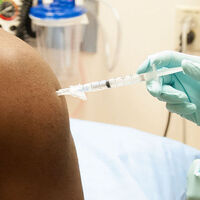


New Delhi [India], June 5 (ANI): The National Medical Commission's (NMC) recent advisory mandating strict adherence to safe injection practices is not just another compliance circular. It is a direct response to preventable outbreaks of HIV, Hepatitis B (HBV), and Hepatitis C (HCV) caused by unsafe reuse of syringes, needles, and other single-use medical devices.
Despite decades of evidence and repeated warnings from the World Health Organisation (WHO), unsafe injection practices persist in India under the guise of 'cost-saving.' This false economy has led to catastrophic consequences: avoidable infections, lifelong treatment costs, and erosion of public trust in healthcare systems.
The NMC advisory makes clear that single-use devices must never be reused. Reuse of syringes, dialysers, or vials is a direct breach of patient safety. Safety-engineered auto-disable syringes must be progressively adopted. These devices eliminate the possibility of reuse and protect healthcare workers from needle-stick injuries. Biomedical Waste Management Rules, 2016 must be enforced. Proper segregation and disposal of sharps is non-negotiable. Training and audits are mandatory. Healthcare workers must undergo regular competency assessments, and institutions must conduct strict monitoring.
Healthcare experts warn that failure to act decisively will perpetuate outbreaks and increase the long-term financial burden on the health system. Dr. Col Harinder Singh Ratti, Consultant and Medical Advisor, Safe Point, notes, 'The advisory is timely and evidence-based. Its effectiveness, however, depends on whether institutions move beyond paper compliance to real-world implementation with zero tolerance for reuse.'
Industry leaders echo this urgency. Rajiv Nath, Forum Coordinator, Association of Indian Medical Device Industry (AiMeD), stated: 'India has the manufacturing capacity to supply safety-engineered syringes at scale. The barrier is not technology; it is willpower. Procurement administrators must prioritise patient safety over short-term cost-cutting. Single-use devices like syringes and dialysers or AVF needles must not be reused. Unsafe injection practices are entirely preventable, and continuing them is indefensible.'
Policy Makers Must Act Now on following reasons. Public health cost of inaction: Treating HIV, HBV, and HCV infections acquired through unsafe injections costs exponentially more than safe devices. Global credibility: As one of the world's largest users of injectable medicines and vaccines, India's leadership in safe injection and drug delivery or safe blood management practices, is critical to global health security.Patient trust: Every reused syringe erodes confidence in healthcare institutions and undermines national health programs.
The NMC advisory says it must be treated as a binding mandate, not a suggestion.
Procurement administrators, hospital authorities, and policymakers must: Enforce zero tolerance for reuse across all facilities. Allocate budgets for safety-engineered syringes like Auto Disable Syringes and Sharps Injury prevention devices as a public health investment, not a discretionary expense. Establish accountability mechanisms under Accreditation schemes --including audits, reporting of needle-stick injuries, and penalties for non-compliance. Launch patient awareness campaigns to empower communities to demand safe injection practices.
Unsafe injection practices are not a matter of affordability; they are a matter of accountability. India has the capacity, technology, and cost-effectiveness of HTA (Health Technology Assessment) evidence. What is needed now is decisive action to protect patients and healthcare workers alike. (ANI)